
Network
Fiji has a handful of public charging points for an entire country. We are closing that gap with fast chargers where vehicles already spend time, and we publish what is live and what is next.
Network status
Every site is monitored remotely from the day it is energised. Live and offline status is published here and on each charger page.
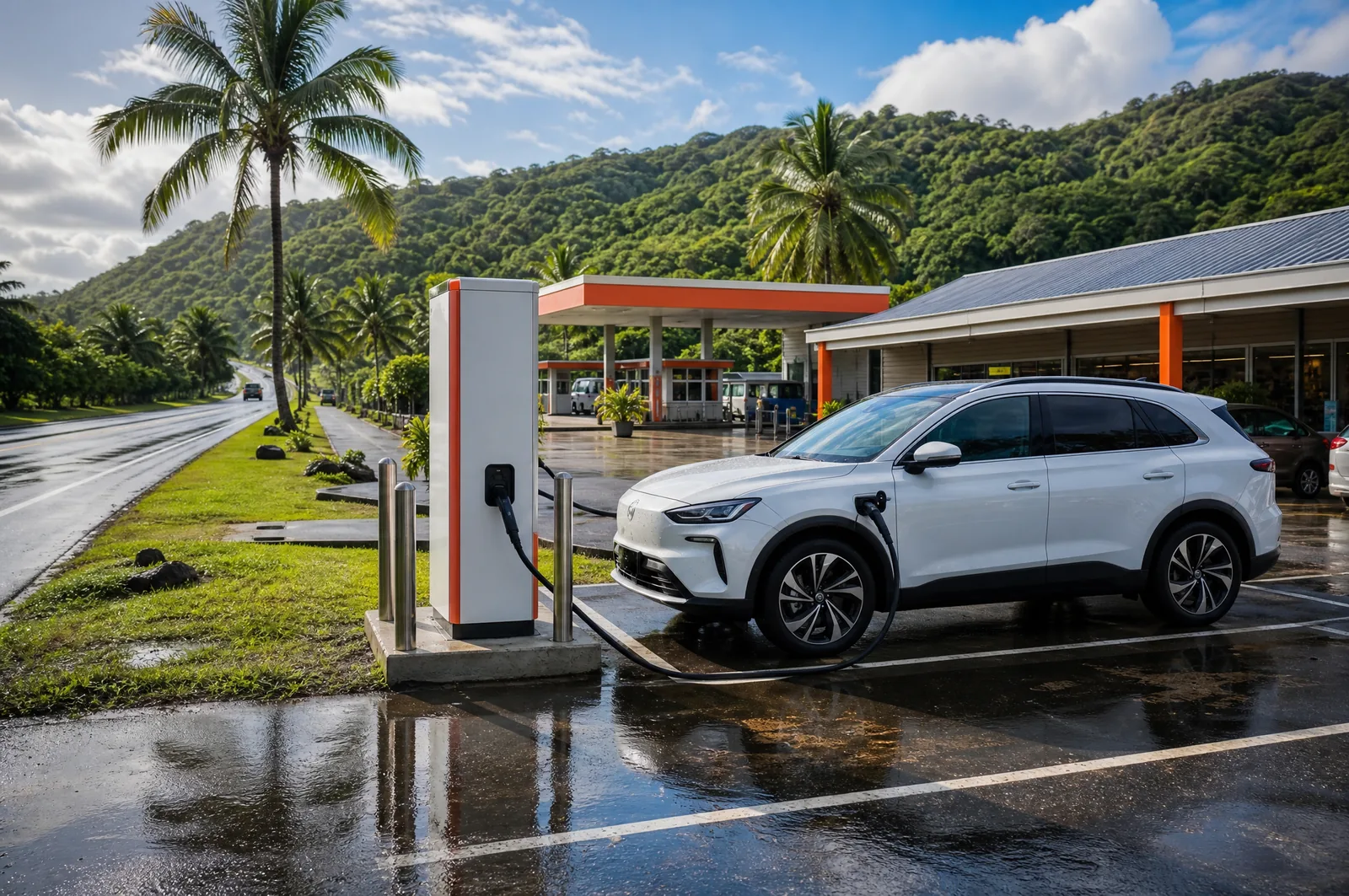
On the Queens Road at True Mart Yadua, west of Sigatoka. The midpoint stop between Suva and Nadi.
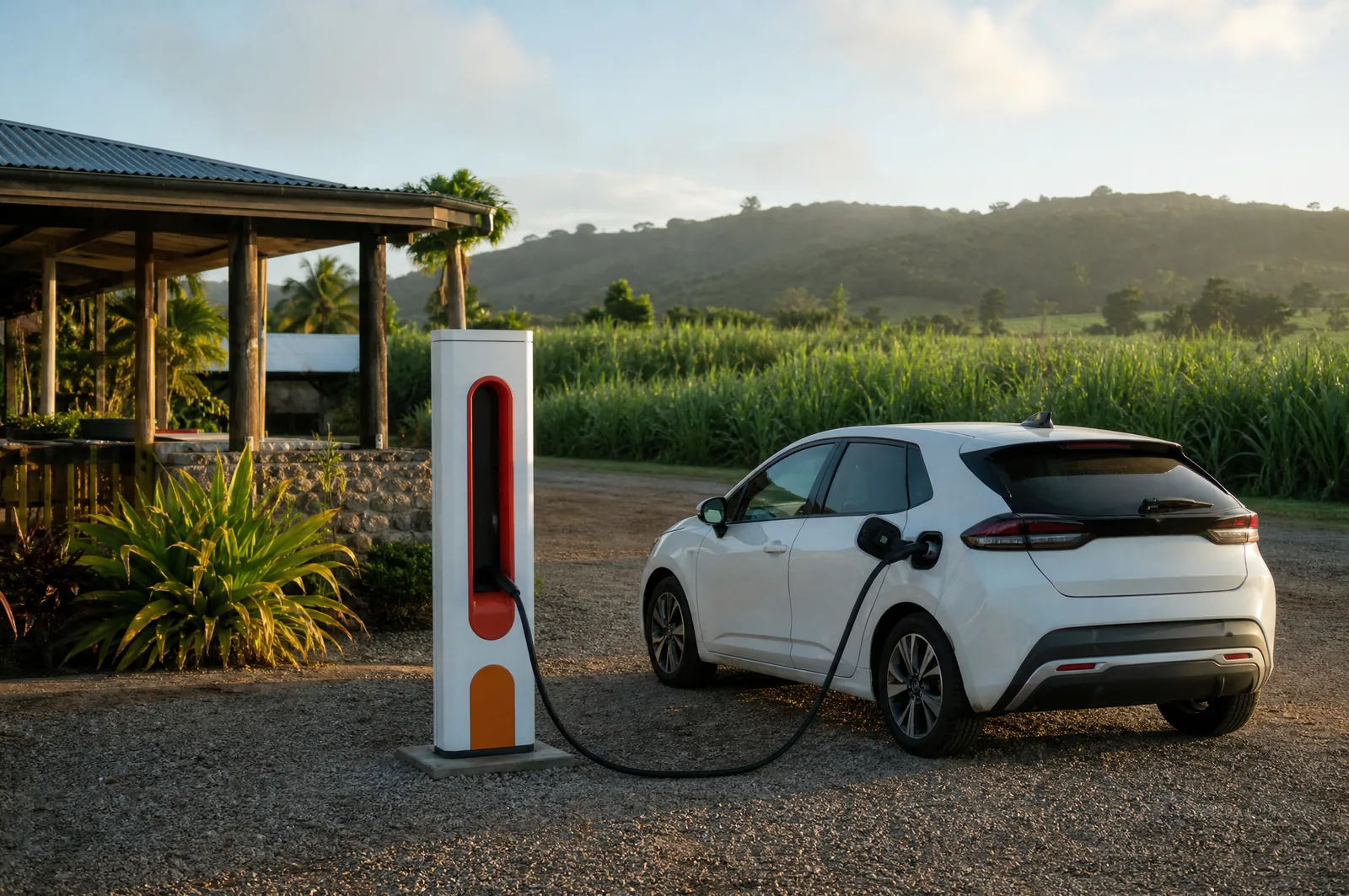
Queens Road corridor south of Suva, at the Grace Road Food Company site.
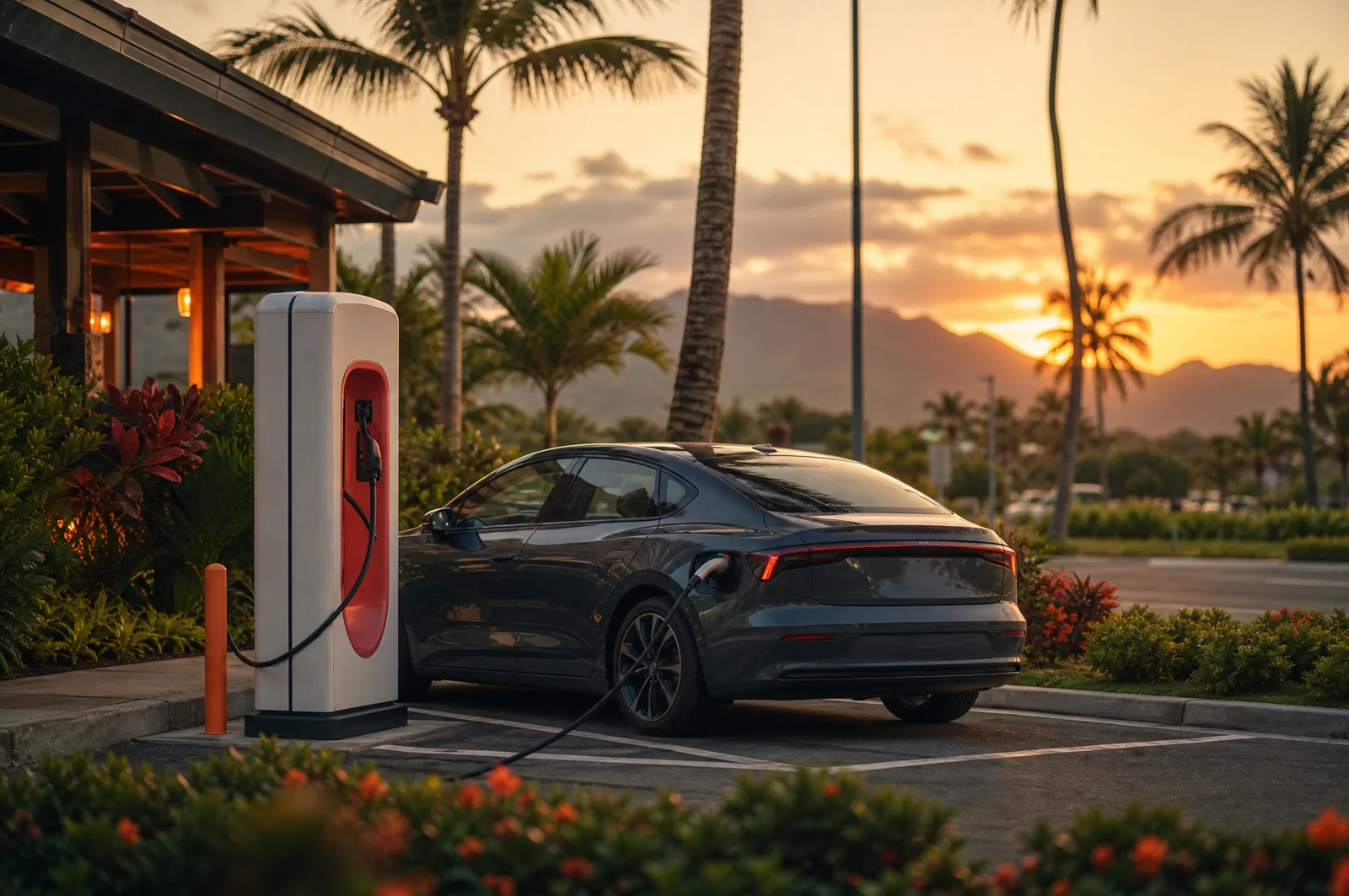
Nadi and the airport corridor, where visitors, rentals and tourism fleets charge.
Next
We prioritise locations where vehicles already dwell for 30 minutes or more, because that is where charging works without anyone having to wait around.
The standard unit
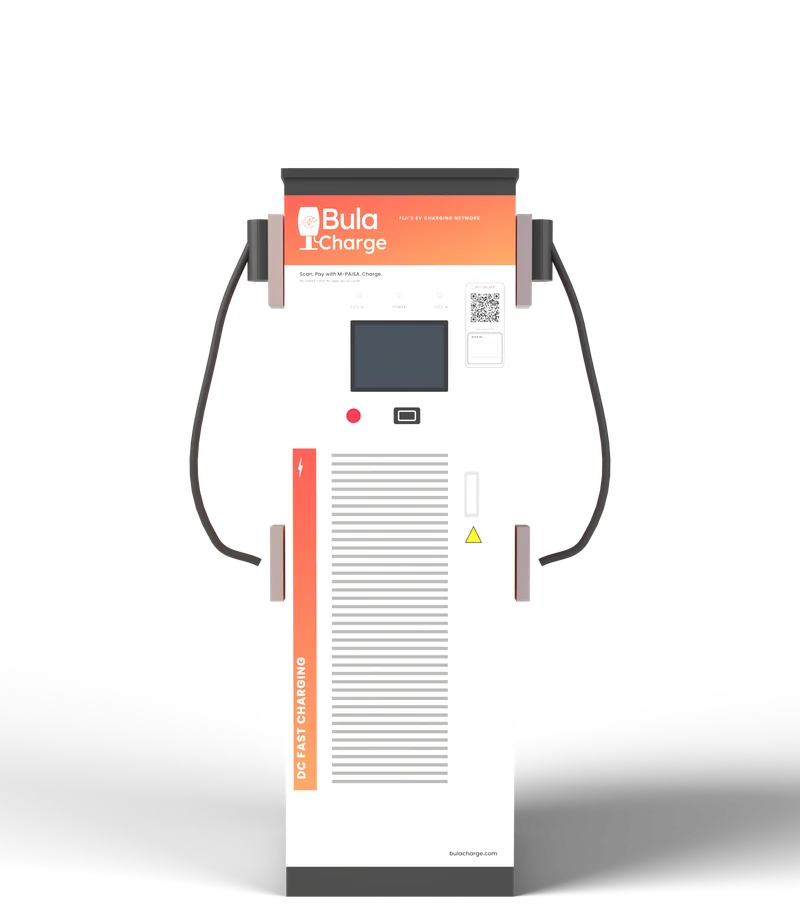
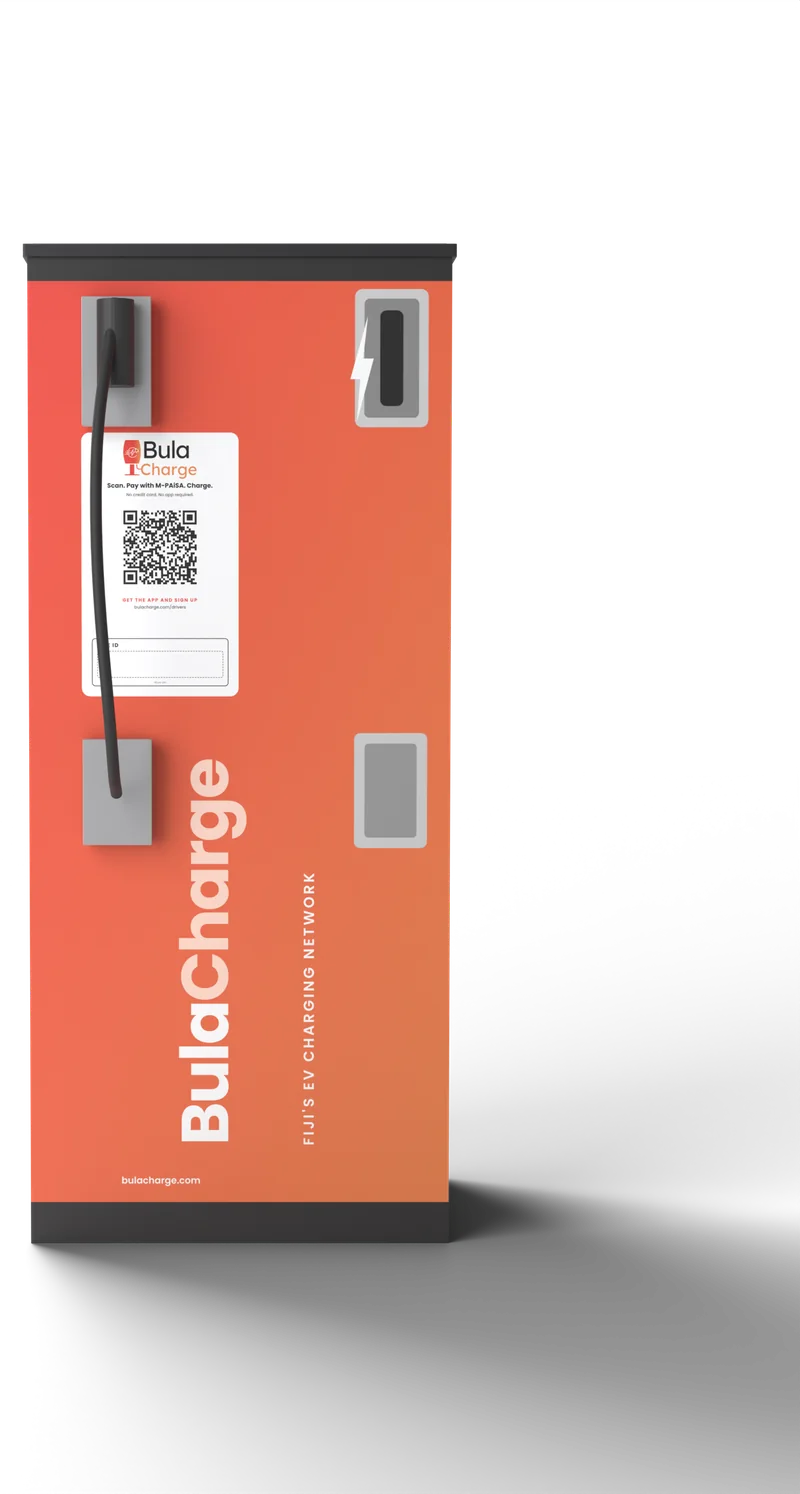
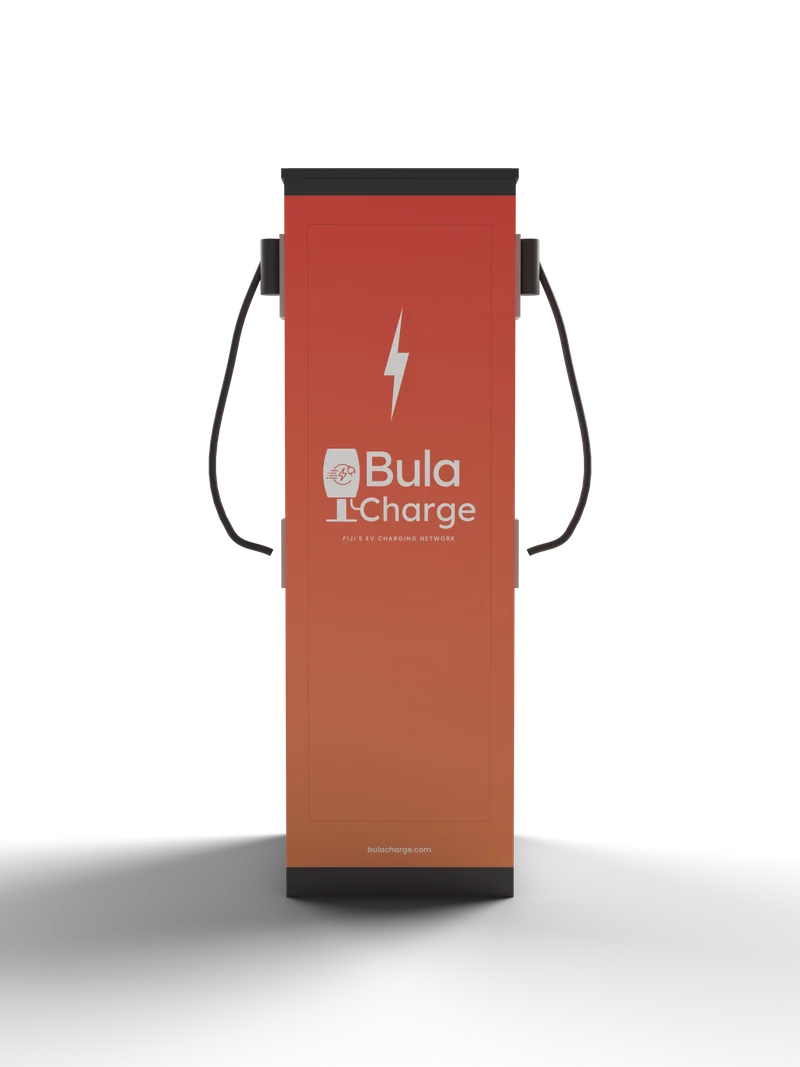
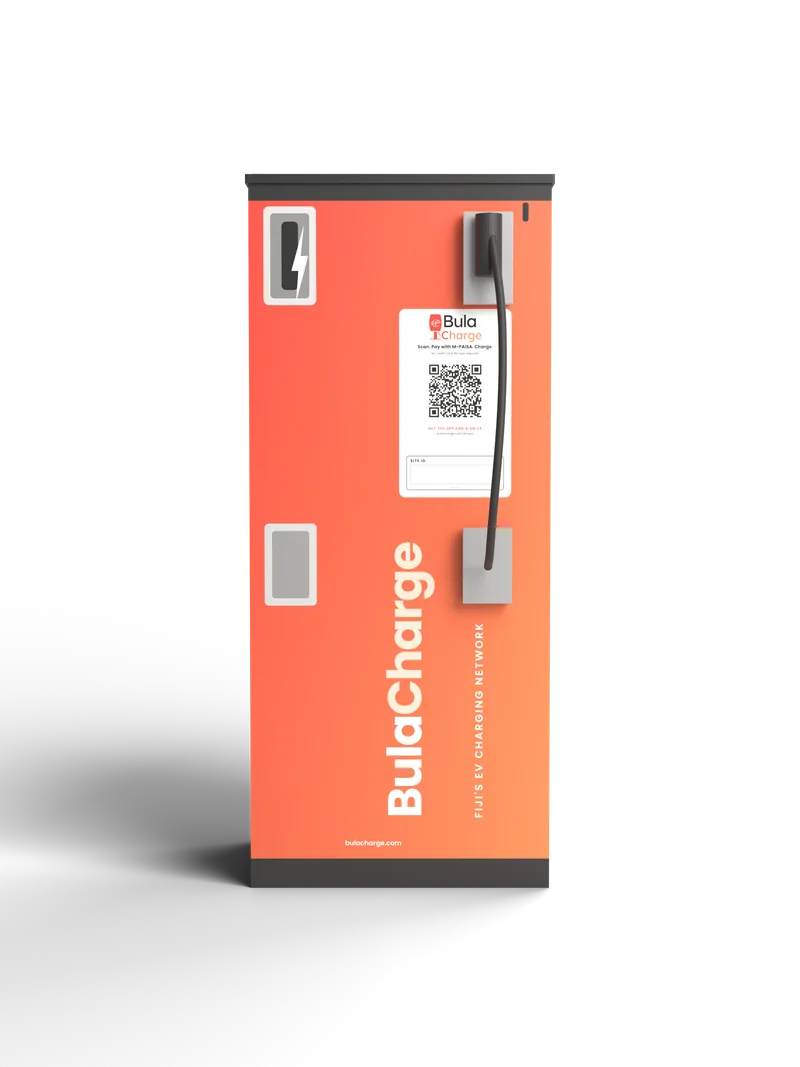
Learn it once, use it everywhere. Two CCS2 connectors, the screen on the front, the Site ID on the sides.
Charger types
Every site lists its power and connector. Here is how to read them.
| Type | Power | Connector | Typical use | Time to 80% |
|---|---|---|---|---|
| DC ultra-fast | 120kW to 200kW | CCS2, dual plug | Highway corridors, fleet depots, the fastest top-up on the network | 20 to 40 minutes |
| DC fast | 80kW | CCS2, dual plug | Supermarkets, town centres, resorts with turnover | 30 to 60 minutes |
| AC destination | 7kW to 22kW | Type 2 | Resorts, hotels, workplaces, overnight | 4 to 8 hours |
Times are indicative and depend on your vehicle's battery size and maximum charge rate. Charging slows above 80 percent to protect the battery.
The hardware
Our DC fast-charge stations carry two CCS2 plugs each, so every station serves two bays. When both plugs are in use the station shares its power automatically between the two vehicles, and gives the full rate back the moment one finishes.
Dual CCS2 plugs on every DC station. Both bays charge at the same time, with power shared automatically between them.
Output from 150V to 1000V DC at up to 200A per plug covers everything from compact imports to the newest 800-volt platforms.
IP54 outdoor-rated cabinets, running from minus 25 to plus 50 degrees, with surge, earth-leakage and over-temperature protection built in.
How we choose sites
Every location suggestion is logged. Clusters of requests in one area move that area up the list.
A charger only earns its keep where vehicles already stop. Resorts, supermarkets and depots first; roadside lay-bys last.
Available power supply decides how fast a charger can be. Where the supply is thin, on-site solar and battery storage can close the gap.
Suggest a location
Driver demand is how we choose the next sites. Tell us where you drive and where you run low, and if you own a site that could host a charger, say so.
Contact details are being finalised and will appear here shortly.
Based in Suva, Fiji, operating across Fiji.